India’s journey from being the epicenter of the global polio epidemic to achieving and maintaining a polio-free status stands as one of the most monumental public health achievements of the 21st century. Officially declared polio-free by the World Health Organization (WHO) on March 27, 2014, India’s success was not a stroke of luck but the result of a meticulously planned, persistently executed, and massively scaled public health campaign known as the Pulse Polio Immunization Programme . This program, which continues to this day, serves as a powerful blueprint for other nations grappling with infectious diseases and is a testament to what can be achieved through political will, community engagement, and scientific innovation. This article delves into the history, strategy, and ongoing efforts of India’s Pulse Polio drive, exploring the mechanisms that led to its success and the challenges that lie ahead in sustaining this hard-won victory. By understanding the intricacies of this campaign, we gain invaluable insights into the art of eradicating disease on a massive scale.
The Genesis of the Pulse Polio Programme
The story of India’s fight against polio begins in earnest in the mid-1990s. In 1995, the Government of India, in collaboration with global partners like the World Health Organization (WHO), UNICEF, the Bill & Melinda Gates Foundation, Rotary International, and the U.S. Centers for Disease Control and Prevention (CDC), launched the Pulse Polio Immunization Programme . The word “pulse” in the program’s name signified its nature as a mass, campaign-style intervention designed to be administered in quick, periodic bursts to supplement routine immunization efforts.
The foundation for this massive undertaking was laid a year earlier, in 1994, when a pilot campaign was held in Delhi on October 2nd, Gandhi Jayanti. This event, which successfully vaccinated over one million children, served as a proof of concept, demonstrating that a large-scale, organized effort could effectively deliver the Oral Polio Vaccine (OPV) to a vast number of children in a short time . The success in Delhi galvanized the nation, and the model was rapidly scaled up to become the nationwide Pulse Polio campaign we know today.
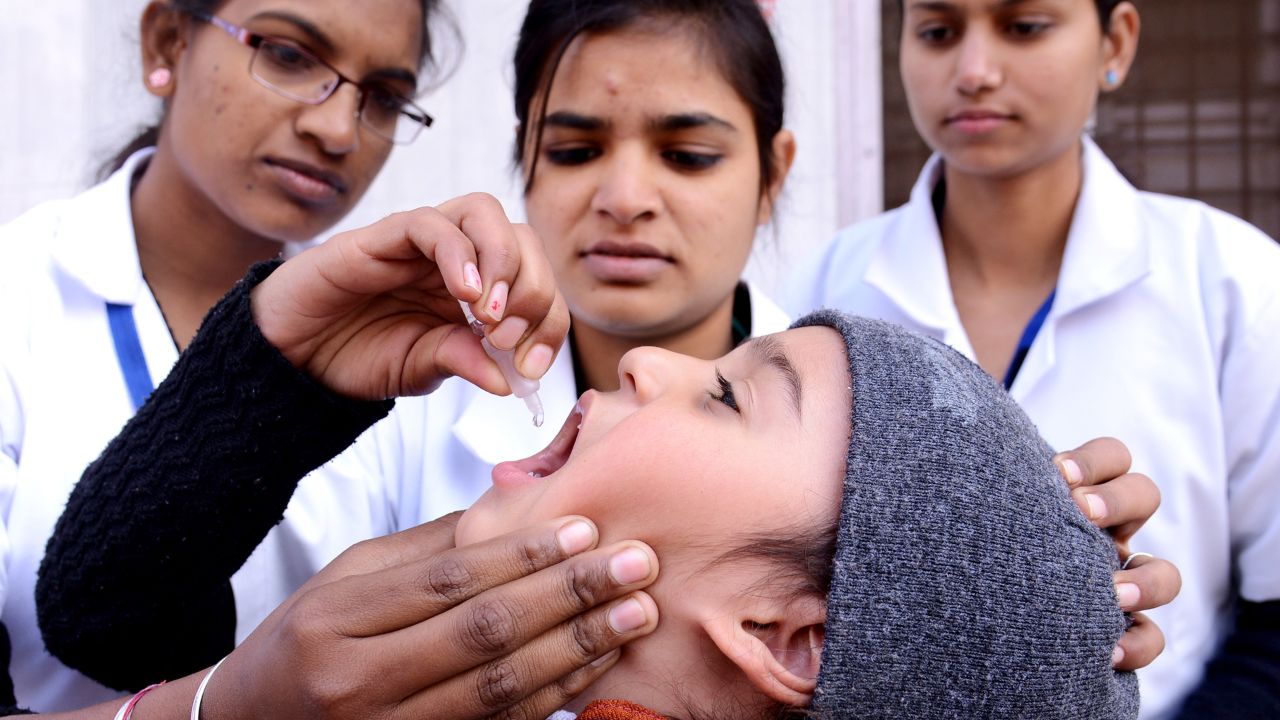
The campaign became an iconic part of Indian life, with the slogan “Do Boond Zindagi Ki” (Two Drops of Life) becoming a household phrase . On designated National Immunization Days (NIDs), also known as ‘Polio Ravivar’ (Polio Sunday), millions of health workers, volunteers, and local community members would set up booths across the country, from the busiest cities to the most remote villages, to administer these two drops of life to every child under the age of five .
Overcoming Formidable Challenges
India’s path to polio eradication was fraught with challenges that would have seemed insurmountable in any other context. The country possessed several characteristics that made it a particularly difficult environment for polio eradication:
A. Demographic Density and Birth Rate: With a population exceeding 1 billion and approximately 26 million children born each year, the sheer number of children to be vaccinated was staggering . In 2009 alone, India accounted for 741 polio cases, representing 60% of the global burden .
B. Sanitation and Hygiene Issues: Polio is transmitted through the fecal-oral route. Poor sanitation, open defecation, and unsafe drinking water were widespread in many parts of India, particularly in rural and peri-urban areas. This high disease burden and environmental contamination created a perfect storm for the poliovirus to thrive and spread rapidly .
C. Inaccessible and Isolated Populations: Reaching children in remote, hilly, or conflict-affected areas posed a significant logistical challenge. Tribal populations, migrant workers, and nomads were often missed by routine health services, creating “pockets” of low immunity where the virus could continue to circulate undetected .
D. Vaccine Hesitancy and Misinformation: Deep-seated cultural beliefs, religious misconceptions, and misinformation about the polio vaccine, including rumors that it could cause sterility or was part of a population control plot, created significant resistance in some communities . Overcoming this required targeted, culturally sensitive communication strategies.
E. High-Risk Reservoirs: The states of Uttar Pradesh and Bihar in the north of India were identified as major reservoirs of the virus. These states had high population densities, poor sanitation, and low routine immunization coverage, making them epicenters of polio transmission. A significant portion of the national campaign’s resources was concentrated on these “high-risk” areas .
The Multi-Pronged Strategy for Eradication
Confronted with these immense hurdles, the Pulse Polio Programme evolved a sophisticated and adaptive strategy that addressed every facet of the problem. The success of the program can be attributed to a multi-pronged approach that included cutting-edge science, meticulous planning, and relentless community engagement.
Scientific and Logistical Innovations
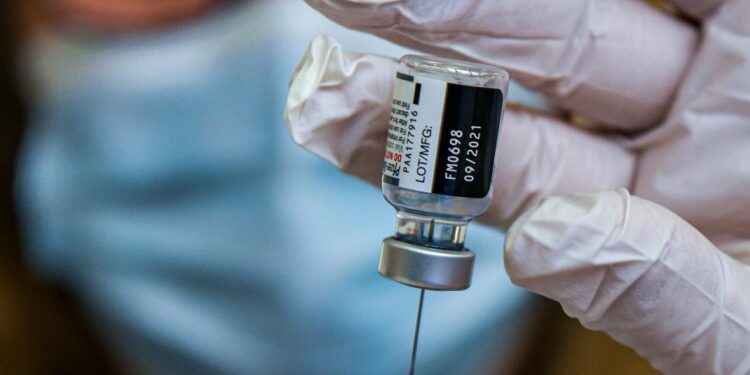
The technical backbone of the campaign was the use of the Oral Polio Vaccine (OPV). OPV is a live, attenuated vaccine that is easy to administer (as drops) and provides excellent ‘herd immunity’ because it is shed in the stool and can immunize others in the community through fecal-oral transmission. However, the program’s scientific strategy also evolved. Initially, a trivalent OPV (tOPV) was used, which protected against all three wild poliovirus types. Later, India transitioned to using more effective and targeted vaccines, such as monovalent OPVs (mOPV) for specific strains and, in a crucial move, the bivalent OPV (bOPV) in 2010, which targeted both type 1 and type 3 polioviruses that were still circulating .
Furthermore, the introduction of the Inactivated Polio Vaccine (IPV) into the routine immunization schedule in 2015 was a significant step. While OPV is excellent for inducing intestinal immunity and stopping transmission, IPV provides robust humoral immunity, protecting against paralysis and helping to prevent the rare cases of vaccine-derived poliovirus (VDPV) [citation:14]. India also began manufacturing and using the novel oral polio vaccine type 2 (nOPV2) globally, a more genetically stable vaccine designed to combat VDPV outbreaks .
Surveillance and Micro-Planning
One of the most critical components of the success was the establishment of an ironclad surveillance system. The cornerstone of this was the Acute Flaccid Paralysis (AFP) surveillance network.
A. AFP Surveillance: This system involved monitoring every case of sudden, unexplained paralysis in children under 15 years of age. Health workers were trained to identify AFP cases, and stool samples were collected and tested within a strict timeframe (typically 14 days) to determine if poliovirus was the cause. This “case-based” surveillance ensured that every child with AFP was investigated, and the virus was quickly identified and contained .
B. Environmental Surveillance: In addition to AFP surveillance, India implemented environmental surveillance, which involved testing sewage water in high-risk areas for the presence of poliovirus . This provided an early warning system, allowing health officials to detect the virus even in the absence of paralytic cases and to assess the effectiveness of vaccination campaigns.
C. Micro-Planning: To ensure that no child was missed, the campaign relied on detailed “micro-plans” for each district and even each village or urban slum. These plans mapped out every household, identified the number of children under five, assigned vaccination teams to specific areas, and outlined the logistics of distributing vaccines and managing the booths [citation:14]. This granular, data-driven approach was critical for reaching the last mile.
Community Engagement and Social Mobilization
Recognizing that a top-down approach would not succeed, the program placed immense emphasis on community mobilization and social communication. The goal was to build trust and create a sense of collective responsibility.
A. Engaging Local Leaders: The government and its partners worked with local influencers, religious leaders, community elders, and even celebrities to champion the cause of polio vaccination. These trusted figures were instrumental in dispelling rumors and encouraging families to bring their children to the booths .
B. Role of Frontline Workers: The true heroes of the campaign were the approximately 2 million health workers and volunteers who went door-to-door during NIDs . They worked tirelessly, often in challenging conditions, to administer the drops and track every child. In some campaigns, health workers had to visit up to 2 crore (20 million) households to ensure coverage .
C. Mass Media Campaigns: The government launched massive and sustained media campaigns across television, radio, and print media to raise awareness and encourage participation. Studies have shown that reinforced media communication acts as a powerful behavioral trigger, fostering a sense of urgency and normalizing participation in the campaign . One study in Odisha found that an intensive media campaign led to a 99% increase in OPV uptake at a clinic during a subsequent NID .
The Triumph and the Path Forward
The relentless efforts of all stakeholders finally paid off. On January 13, 2011, a two-year-old girl in Howrah, West Bengal, was India’s last reported case of wild poliovirus . Three years later, having met the WHO’s stringent criteria, India was officially certified polio-free. This certification was not just a victory for India but for the entire Southeast Asia region .
However, the declaration of success did not mean the end of the Pulse Polio programme. Maintaining polio-free status in a world where polio is still endemic in neighboring countries like Pakistan and Afghanistan requires constant vigilance . The risk of importation remains a serious threat.
To counter this, India continues to hold annual National Immunization Days (NIDs) and Sub-National Immunization Days (SNIDs) to keep population immunity levels high . The campaign also continues to focus on:
A. Routine Immunization: Strengthening the Universal Immunization Programme (UIP) to ensure that every newborn receives their polio vaccine as part of their regular schedule. The UIP now provides free vaccines for 12 vaccine-preventable diseases .
B. Vaccination at Borders: Specific strategies are in place to vaccinate mobile and migrant populations, particularly at international borders, to prevent the re-importation of the virus .
C. Addressing New Threats: India is now focused on combating the threat of Vaccine-Derived Polioviruses (VDPV), which can emerge in communities with low immunization coverage. The introduction of nOPV2 is a key part of this strategy. Additionally, routine immunization coverage has climbed to over 93%, but there are still 270 districts considered high-risk due to sub-optimal coverage .
Conclusion
India’s Pulse Polio Programme is a powerful and inspiring story of what can be achieved when a nation commits itself to a single, life-saving goal. It is a testament to the power of a comprehensive, data-driven, and inclusive public health strategy. The legacy of the campaign extends far beyond polio, having strengthened India’s health system, established robust surveillance networks, and demonstrated the immense value of community participation.
The successful blueprint used in the Pulse Polio crusade, combining mass campaigns, micro-planning, surveillance, and communication, is now being applied to other public health challenges, such as the Mission Indradhanush initiative, which aims to improve routine immunization coverage for all vaccine-preventable diseases . As the world continues the fight against polio to achieve global eradication, the story of India’s incredible journey serves as both a beacon of hope and a crucial lesson in perseverance, innovation, and collective action.