
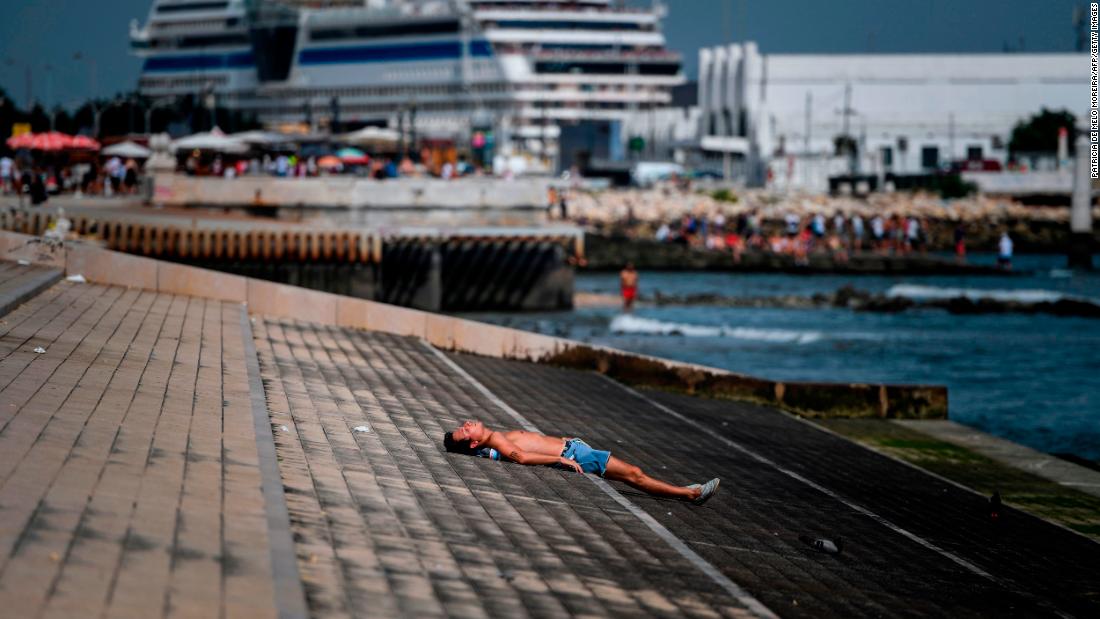
The summer of 2026 will be etched in the memory of Europeans for all the wrong reasons. A relentless and brutal heatwave has gripped the continent, shattering long-standing temperature records and tragically claiming nearly 1,000 lives. The World Health Organization (WHO) has reported more than 1,300 excess deaths across Europe since June 21, directly linked to the soaring temperatures that have turned the region into a furnace. This is not merely a heatwave; it is a stark manifestation of a rapidly changing climate and a sobering reminder that the “once-in-a-generation” weather event is now an annual occurrence.
A Continent Under Siege: The Human Toll
The human cost of this extreme weather event is devastating. France has been one of the hardest-hit nations, with its national health ministry reporting approximately 1,000 more deaths than expected in just a few days. The majority of these fatalities are among the most vulnerable: the elderly. French health officials have noted that 85% of those who perished were aged 65 and over, with a significant 40% rise in deaths occurring at home. This highlights a critical flaw in the continent’s preparedness, as homes in many European countries are designed to retain heat for cold winters, not to withstand summer extremes.
The tragedy extends beyond France. Spain has recorded over 200 deaths linked to the extreme heat, with temperatures exceeding 40°C in many parts of the country. Germany has also reported dozens of fatalities, some of which were tragic drownings as people sought to cool off in rivers and lakes, only to find themselves in peril. Italy, the UK, and Poland are among the many nations reporting a surge in heat-related illnesses and deaths as healthcare systems are stretched to their breaking point.
The crisis has led to mass school closures, the cancellation of major public events, and a scramble to protect the population from what WHO chief Tedros Adhanom Ghebreyesus described as the “silent killer”.
The Science Behind the Scorcher

A. The Omega Block and Heat Dome
To understand the severity of this event, it is crucial to analyze its meteorological roots. The primary driver is a phenomenon known as an Omega Block, a persistent weather pattern that gets its name from its resemblance to the Greek letter Ω.
The Mechanism:
-
The Normal State: Typically, a west-to-east flowing river of air called the jet stream carries weather systems across the Atlantic and over Europe.
-
The Blocking Pattern: During an Omega Block, the jet stream buckles dramatically, forming a high-pressure ridge trapped between two low-pressure troughs. This “block” can remain stationary for days or even weeks, preventing the normal movement of weather fronts.
-
The Heat Dome: Underneath this ridge of high pressure, air sinks and compresses towards the surface. As the air compresses, it heats up, and because the sinking air is stable, it suppresses cloud formation. This allows uninterrupted sunlight to bake the ground, creating a massive “heat dome” of stagnant, intensely hot air.
Germany recorded a historic high of 41.7°C, the Czech Republic hit 41.1°C, and Poland set a new national record of 40.5°C all direct consequences of this stationary heat engine.
B. Climate Change: The Amplifier
The searing temperatures recorded this June would have been “virtually impossible” without human-caused climate change. Scientists at the World Weather Attribution group have been unequivocal: climate change has dramatically increased the odds and severity of such heatwaves.
Key Facts:
-
Europe is the fastest-warming continent on Earth, heating at twice the global average.
-
The stifling nighttime temperatures observed are now around 100 times more likely than they were just two decades ago due to human influence.
-
A heatwave of this magnitude occurring 50 years ago would have been roughly 3.5°C cooler.
-
This means that while blocking events like the Omega Block are natural, when they occur on a warmer planet, the trapped warmth is amplified rapidly, leading to catastrophic results.
Where are the Weak Points?
The high death toll reveals several systemic vulnerabilities across the continent.
A. Inadequate Infrastructure
European infrastructure, particularly housing, was not built for such temperatures. In many cities, asphalt and concrete act as heat sinks, absorbing solar energy during the day and releasing it at night, creating an urban heat island effect that offers little respite even after the sun goes down. The lack of widespread air conditioning, compared to North America or Asia, leaves millions at risk.
B. Strained Public Services
Hospitals and emergency services have been overwhelmed by cases of heatstroke, dehydration, and respiratory failure. The heat has also damaged physical infrastructure, causing roads to melt, tram tracks to warp, and electrical grids to buckle under the surge in demand for cooling.
C. Fragmented Political Response
The European Union’s response has been decentralized, with the European Commission arguing that heatwave management is primarily a national responsibility. While countries like France have developed comprehensive heat plans, the overall response across the continent has been uneven. German Health Minister Karl Lauterbach criticized the EU for acting too late, stating, “We only say it’s an emergency after the damage is done”.
A Historical Comparison: The Echo of 2003
The current catastrophe recalls the devastating European heatwave of 2003, which is believed to have claimed over 14,800 lives in France alone and tens of thousands across Europe.
Lessons from 2003:
-
France’s Transformation: The 2003 disaster was a catalyst for change in France. The government built one of the world’s most comprehensive heat-resilience programs, including a four-tiered alert system, ensuring access to cool spaces, and mandatory checks on vulnerable residents.
-
Preparedness vs. Reality: Despite these improvements, the early June heatwave in 2026 has shown that even advanced plans can be overwhelmed by the sheer intensity and timing of a heat event that arrived before the summer officially began.
Staying Safe: WHO Guidelines
In response to the crisis, the WHO has issued practical tips for staying cool during extreme heat.
A. Outsmarting the Heat
-
Avoid the Heat: Stay out of the sun and avoid outdoor activity during the hottest part of the day (typically 11 a.m. to 3 p.m.). If you must go out, stay in the shade.
-
Cool Your Home: Use the night air to cool your home. During the day, when it is hotter outside than inside, close windows and cover them with blinds to shut out the sun. Turn off as many electrical devices as possible, as they generate heat.
-
Hydrate: Drink water regularly, regardless of your activity level. Do not wait until you are thirsty. The WHO recommends at least one cup per hour, up to two to three liters per day.
B. Misconceptions and Directives
-
Fan Usage: Electric fans are only useful when temperatures are below 40°C. Above that, fans blow hot air over the body, which can actually increase heat stress and dehydrate you faster.
-
Air Conditioning: If using AC, setting the thermostat to 27°C and using a fan can make the room feel 4°C cooler while saving up to 70% on electricity bills.
-
Check on Others: Regularly check on vulnerable people, especially those over 65, those with chronic illnesses, and those living alone.
-
Never Leave Children or Pets in Parked Vehicles: Even with the windows cracked, temperatures inside a car can reach lethal levels in minutes.
The Economic Cost and Future Outlook
Beyond the tragic human cost, the heatwave is inflicting significant economic damage. The European Trade Union Confederation has called for a binding EU directive on maximum working temperatures for outdoor laborers. As extreme heat reduces labor productivity and strains power grids, the long-term economic impact will be immense.
The Vicious Cycle of Cooling
A significant challenge in the long-term strategy is the reliance on air conditioning. While it provides immediate relief, the electricity required to run it is still largely generated by fossil fuels, contributing to the climate change that causes the heatwaves. The UN Environment Programme (UNEP) warns that some cooling equipment runs on hydrofluorocarbons, which are thousands of times more potent as greenhouse gases than carbon dioxide.
Conclusion: A New Normal

The 2026 European heatwave is a brutal climax to a series of warnings from the scientific community. It confirms that climate change is not a distant threat but a present reality. As Europe continues to be the world’s fastest-warming continent, the summers will become hotter and deadlier.
The lesson is clear. Nations must not only react to heatwaves but also prepare for them. This means redesigning cities with more green spaces to mitigate the urban heat island effect, retrofitting housing for cooling, and phasing out fossil fuels to stop the underlying warming trend. The “once-in-a-generation” heatwave has become an annual visitor, and it is demanding permanent change.