

The year 2026 will be etched into the annals of history as a stark turning point, a year when the abstract warnings of climate change materialized into a tangible and lethal global health emergency. The European continent, in particular, has become the epicenter of a crisis of unprecedented scale, as a relentless and record-shattering heatwave grips the region, exposing the profound vulnerabilities of modern society. This is not merely a weather event; it is a systemic failure, a stress test of our healthcare systems, infrastructure, and social safety nets, and a grim harbinger of a future defined by escalating climate extremes . The term “silent killer” has never been more apt, as the 2026 heatwave demonstrates that extreme heat is a profound threat to health, livelihoods, and the very fabric of our communities .
The Unprecedented Scale of the 2026 Heatwave
The statistics emerging from the 2026 European summer are nothing short of alarming. A massive and oppressive “heat dome” has settled over the continent, shattering all-time temperature records with an ease that has shocked meteorologists and climate scientists alike. Germany recorded a staggering 41.7°C in Coschen, while the Czech Republic witnessed 41.9°C in Doksany. Poland, Hungary, and France also saw temperatures soar past the 40°C mark, with France experiencing temperatures of 41°C and above . These are not just incremental increases; they are quantum leaps beyond historical norms.
The human toll of this extreme heat is catastrophic. The World Health Organization (WHO) has confirmed that more than 1,300 excess deaths have been recorded across Europe since June 21 alone, a number that is expected to climb as data continues to be compiled . France has been particularly hard-hit, with public health authorities reporting approximately 1,000 excess deaths during the first week of the heatwave. During the worst days, the country recorded over 1,400 deaths per day, a figure starkly above the seasonal average of 900-1,000 daily deaths . This tragic statistic reveals that nearly 90% of the victims were aged 65 years or older, underscoring the lethal vulnerability of the elderly population to extreme heat .
The crisis extends far beyond France. WHO Director-General Tedros Adhanom Ghebreyesus highlighted that 150 million people are currently living under extreme heat conditions across Europe, with hundreds of deaths, school closures, and buckling power grids becoming the new norm . The UK has also not been spared, having already experienced two serious heatwaves in May and June 2026. Experts warn of the potential for a “summer of serial heatwaves,” a prospect that would push public health resources to their absolute breaking point . This follows the pattern of England issuing a red heat-health alert for only the second time in its history, a move that highlights the exceptional and dangerous nature of the current conditions .
The Science Behind the Crisis: Climate Change and the “Silent Killer”
The scientific consensus is unequivocal: climate change is the primary driver of this escalating crisis. Europe is warming faster than any other continent, heating at twice the global average rate . This accelerated warming is a direct consequence of human-caused greenhouse gas pollution, which has raised the baseline global temperature. The current heatwave is being exacerbated by other factors, including very warm oceans, dry soils, slow-moving high-pressure systems, and the El Niño conditions that have developed in the tropical Pacific. While El Niño is a natural phenomenon, its impact on a climate already destabilized by human activity has created a perfect storm for extreme heat events .
The Mechanisms of Heat’s Lethal Impact
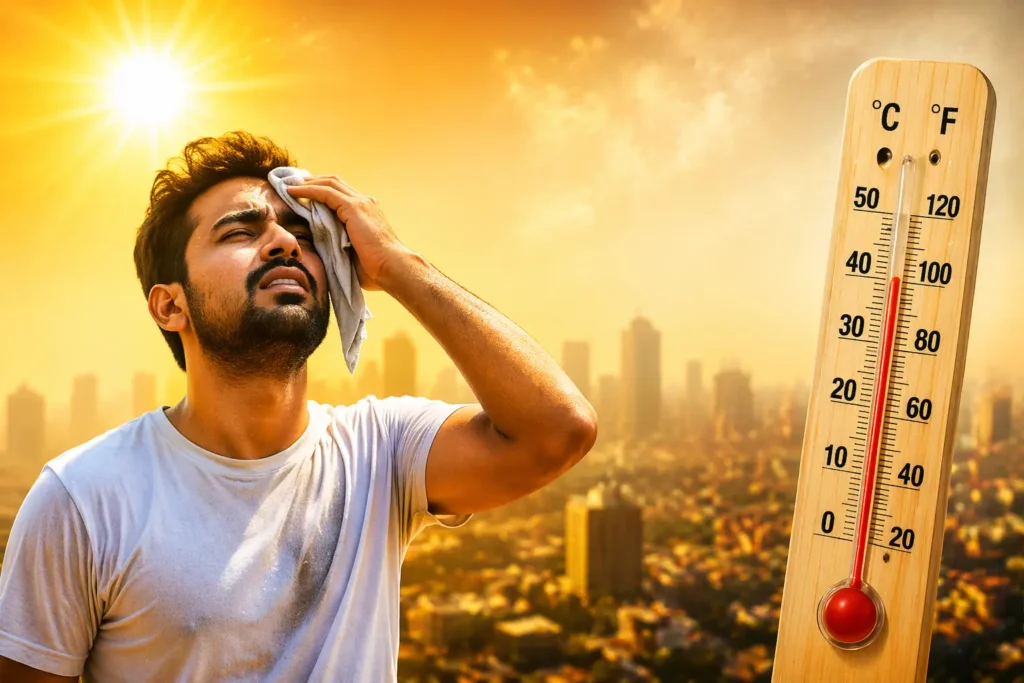
Heat is a particularly insidious threat because it often kills without leaving obvious signs of trauma . The human body functions optimally within a narrow temperature range of 36.5 to 37.5°C, maintained primarily through the evaporation of sweat. However, when ambient temperatures rise, particularly when combined with high humidity, the body’s cooling mechanisms can become overwhelmed, leading to a spectrum of heat-related illnesses . Dehydration, heat exhaustion, and heat stroke represent a progression of severity, with heat stroke being a life-threatening condition characterized by a core temperature exceeding 40°C, multi-organ failure, and neurological impairment .
Physiological Impacts of Extreme Heat
A. Cardiovascular Strain: The body works harder to pump blood to the skin to dissipate heat, placing immense stress on the heart. This can trigger heart attacks and strokes, particularly in individuals with pre-existing heart conditions .
B. Renal Failure: Dehydration and the increased strain on the body can lead to acute kidney injury. The kidneys are particularly vulnerable to heat stress, with a significant increase in patients suffering from kidney complications during heatwaves .
C. Respiratory Distress: Heat can exacerbate respiratory conditions like asthma and chronic obstructive pulmonary disease (COPD). Furthermore, poor air quality and increased pollution during stagnant heatwaves can worsen respiratory illness .
D. Mental Health Impacts: Extreme heat can also affect mental health, increasing distress, anxiety, and cognitive decline. Hot nights prevent the body and mind from recovering, compounding the psychological strain .
E. Exacerbation of Chronic Diseases: Heat does not necessarily create new health problems; instead, it violently exacerbates existing conditions. The 2026 heatwave has led to a surge in cardiovascular emergencies, respiratory distress, and kidney complications among those with chronic illnesses .
Vulnerable Populations: Who Bears the Brunt?
The impact of the 2026 heatwave is not distributed equally. It is a crisis that disproportionately affects the most vulnerable members of society, acting as a magnifying glass for existing social and health inequalities .
Populations Most at Risk
A. Older Adults: As seen in France, where 90% of heatwave victims were over 65, the elderly are exceptionally vulnerable. The aging process reduces the body’s ability to regulate temperature. Additionally, many medications for blood pressure, heart disease, and mental health conditions can impair the body’s ability to cope with heat . Older women are at an even higher risk, often due to increased cardiovascular strain and a higher likelihood of living alone .
B. Children and Infants: Children are more susceptible to heat-related illness because their bodies heat up faster than adults’ and they sweat less efficiently. Heatwaves can also disrupt their education, as high classroom temperatures are linked to a decline in learning outcomes. In 2024, the UN Children’s Fund found that heatwaves disrupted schooling for an estimated 171 million students worldwide .
C. People with Chronic Illnesses: Individuals with pre-existing conditions such as heart disease, kidney disease, respiratory illness, and mental health conditions are at a significantly higher risk of complications and death during heatwaves .
D. Outdoor Workers and Athletes: The 2.4 billion workers exposed to excessive heat globally, as estimated by the International Labour Organization, face a daily reality of physical strain, occupational injuries, and even death. The heatwave has forced construction workers to suspend outdoor activities during the hottest parts of the day .
E. Socioeconomically Disadvantaged Populations: Poverty is a direct risk factor for heat-related death. People with limited resources often live in poorly insulated housing, lack access to affordable energy for cooling, and may work in jobs that require outdoor exposure. They are also less able to recover from the financial and health impacts of a heatwave .
F. People with Disabilities: Those with restricted mobility or cognitive impairment are at heightened risk, as they may be unable to take necessary precautions or access help. Human Rights Watch has highlighted how government heatwave action plans often fail to include specific measures to protect people with disabilities, leaving them neglected in times of crisis .
G. Pregnant Women, Homeless Persons, and Isolated Individuals: These groups are also disproportionately affected. Pregnant women are more susceptible to heat stress, while homeless individuals have limited or no access to cooling shelters. People living alone are at heightened risk of dying in their homes without anyone checking on them .
The Cascading Collapse: Infrastructure and Systems Under Duress
The 2026 heatwave has demonstrated that the effects of extreme heat cascade through every layer of modern society, crippling critical infrastructure and threatening economic stability .
Infrastructure Failures
A. Transport Systems: Steel railway tracks have buckled under the intense heat, forcing rail operators to impose speed restrictions and delays to prevent derailments. Asphalt roads have softened and cracked, leading to traffic disruption and damage to vehicles .
B. Energy Grids: The demand for electricity has soared as millions of households turn on air conditioning and fans. Simultaneously, the heatwave has disrupted electricity supply. France, which relies heavily on nuclear power, has had to reduce output at several reactors because the river water used for cooling has become too warm and levels too low to be safely discharged back into the environment .
C. Water Resources: Prolonged heat and drought have increased pressure on water resources. River levels have fallen, threatening water quality and supply for agriculture, industry, and human consumption. The combination of high demand and reduced supply has created a dangerous nexus for water and energy security .
D. Healthcare Systems: Hospitals have been overwhelmed by a surge in patients suffering from heatstroke, dehydration, and the exacerbation of chronic diseases. Emergency departments are struggling to cope, and the strain on health systems is immense .
Economic and Societal Impacts
A. Productivity Losses: Extreme heat significantly reduces labor productivity, particularly in outdoor sectors like agriculture and construction. The ILO estimates that millions of occupational injuries occur due to excessive heat .
B. Agricultural Damage and Food Security: Heatwaves and drought are reducing crop yields and threatening food security, especially in regions already facing economic fragility .
C. Rising Healthcare Costs: The direct health impacts of heatwaves, from emergency room visits to hospitalizations, impose massive and unsustainable costs on healthcare budgets .
D. School Closures and Educational Disruption: The heatwave has led to school closures across several countries, disrupting the education of millions of children and underscoring the inadequacy of school infrastructure to handle extreme heat .
A Roadmap for Survival: What Can Be Done?
The 2026 heatwave is a powerful and tragic reminder that the time for complacency is over. Survival in a warming world requires a multi-pronged approach, involving immediate personal actions, robust public health strategies, and long-term systemic change .
Personal Protective Measures During a Heatwave
The WHO and other health authorities provide practical guidance for individuals to protect themselves during extreme heat :
A. Stay Out of the Heat: Avoid outdoor activities during the hottest part of the day (usually between 11 a.m. and 3 p.m.). Stay in the shade and, if possible, spend 2-3 hours in a cool place, such as an air-conditioned public building or a cooling center .
B. Keep Your Home Cool: Use night air to cool down your home after sunset. During the day, close windows and cover them with blinds or curtains to block out the sun. Turn off as many electrical devices as possible to reduce heat load .
C. Keep Your Body Cool and Hydrated: Wear light and loose-fitting clothing. Take cool showers or baths. Drink water regularly, at least one cup per hour and two to three liters per day. Avoid sugary, alcoholic, or caffeinated drinks, which can lead to dehydration. Important note: Electric fans should only be used when temperatures are below 40°C. In temperatures above 40°C, fans will heat the body. If using air conditioning, set the thermostat to 27°C and turn on a fan to make the room feel 4°C cooler and save up to 70% on electricity bills .
D. Keep in Touch: Check on family, friends, and neighbors who spend much of their time alone, especially the elderly and those with chronic illnesses .
E. Seek Medical Help: If someone becomes confused, faints, has a seizure, collapses, or has very hot, dry skin, call a doctor or an ambulance immediately .
Systemic Preparedness: Heat-Health Action Plans (HHAPs)
Personal efforts are crucial, but they cannot replace the need for collective, government-led action. The WHO has strongly recommended that all countries develop, implement, and improve Heat-Health Action Plans (HHAPs) . These structured public health plans bring together health and non-health sectors to prepare for, warn about, and respond to extreme heat events.
The WHO has outlined eight core elements for an effective HHAP :
A. Establishing clear governance arrangements with defined leadership, coordination, roles, and responsibilities.
B. Enabling timely action through heat-health warning systems linked to predefined measures.
C. Identifying and prioritizing populations at increased risk and settings with higher exposure and vulnerability.
D. Developing a heat-health communication strategy that provides clear, trusted, and actionable advice.
E. Strengthening the resilience of health services to maintain safe and effective care during extreme heat events.
F. Reducing heat exposure through immediate protective measures and long-term changes in buildings, public spaces, and urban environments.
G. Using heat-health surveillance to detect impacts, guide activation, and adjust response measures.
H. Embedding monitoring, evaluation, and learning to review performance and improve the plan before the next heat season.
These plans must be tailored to the specific needs and resources of every heat-prone area . Crucially, governments must consult with vulnerable communities to ensure that those most affected can help shape responses, preventing further harm and deaths .
The Long-Term Solution: Confronting Climate Change
Ultimately, while immediate adaptation is essential, it is not a sustainable solution. The 2026 heatwave is a direct consequence of a changing climate, and unless the root cause is addressed, these events will only become more frequent, more intense, and more deadly . The WHO has declared the climate crisis and extreme weather a public health emergency .
Europe’s recent experience is a powerful illustration of why the world must urgently transition away from fossil fuels and towards sustainable energy sources. The phenomenon of the “once-in-a-generation” heatwave is now occurring nearly annually, a grim testament to the failure to curb greenhouse gas emissions . As the planet continues to warm, the heat-health literacy of the public and healthcare professionals will become a core component of climate-resilient healthcare. This is not just a matter of comfort; it is a matter of survival. The summer of 2026 is a test of whom governments protect and how, and it is a test we are currently failing . The time for action is now.